Stop guessing where your budget goes. A step-by-step system built for HK businesses to track every dollar across Meta, Google, offline, and everything in between.
- 72% — of HK SMEs can't accurately calculate marketing ROI
- 3.2x — average ROAS benchmark for HK e-commerce
- HK$12K — avg wasted monthly on unmeasured campaigns
7-Step Framework · 5 Attribution Models Compared · HK-Specific Benchmarks · 3 Core Formulas
Do You Have a Measurement Problem?
If two or more of these sound familiar, your marketing measurement needs a proper framework.
- Can't tell which channel actually drives sales
- Report different numbers to different stakeholders
- Only track vanity metrics like likes and followers
- No idea what your customer acquisition cost is
- Make budget decisions based on gut feeling
- Can't justify marketing spend to your boss or board
How Marketing Attribution Actually Works
Attribution is the process of assigning credit to the marketing touchpoints that led to a conversion. The model you choose changes which channels look like winners and which look like budget drains.
Last-click attribution gives 100% credit to the final touchpoint before conversion. Simple, but it ignores everything that built awareness. First-touch attribution credits the channel that introduced the customer. Useful for measuring discovery, but blind to the nurture journey. Multi-touch models (linear, time-decay, data-driven) distribute credit across the full path. More accurate, but require more data and more sophisticated tracking.
For most HK businesses spending HK$30K-200K/month on ads, the practical sweet spot is a hybrid: last-click for performance campaigns, first-touch for brand campaigns, and a linear or time-decay model for the full-funnel view.
ROAS = Revenue Generated / Ad Spend
Example: HK$150,000 revenue from HK$50,000 ad spend = 3.0x ROAS
CAC = Total Marketing Cost / New Customers Acquired
Example: HK$80,000 total spend / 40 new customers = HK$2,000 CAC
LTV:CAC Ratio = Customer Lifetime Value / Customer Acquisition Cost
Healthy benchmark: 3:1 or higher. Below 1:1 means you're losing money on every customer.
- 68% — of HK marketers still use last-click only
- 2.4x — ROAS uplift after switching to multi-touch
- HK$2,100 — average CAC for HK service businesses
- 45 days — typical HK B2B sales cycle length
7 Steps to Measurable Marketing ROI
Follow these steps in order. Each builds on the previous one. Skip a step and the whole system breaks down.
1. Define Business Objectives
Start with revenue targets, not marketing metrics. Work backwards: if you need HK$500K in quarterly revenue and your average deal is HK$25K, you need 20 closed deals. If your close rate is 25%, you need 80 qualified leads. Now you have a measurable marketing goal.
2. Select KPIs Per Channel
Each channel gets its own primary KPI. Meta Ads: cost per lead (CPL) and ROAS. Google Ads: cost per acquisition (CPA) and quality score. SEO: organic traffic value and ranking positions. Email: revenue per send. Never measure every channel by the same metric.
3. Set Up Tracking Infrastructure
Install Meta Pixel, Google Tag Manager, and GA4 with enhanced e-commerce. Use UTM parameters on every link: source, medium, campaign, content, term. This is non-negotiable. Without proper tagging, everything downstream is guesswork.
4. Build Your Attribution Model
Start with last-click in GA4 (it works out of the box). Once you have 3 months of data and 1,000+ conversions, switch to data-driven attribution. For businesses with fewer conversions, time-decay is the best middle ground.
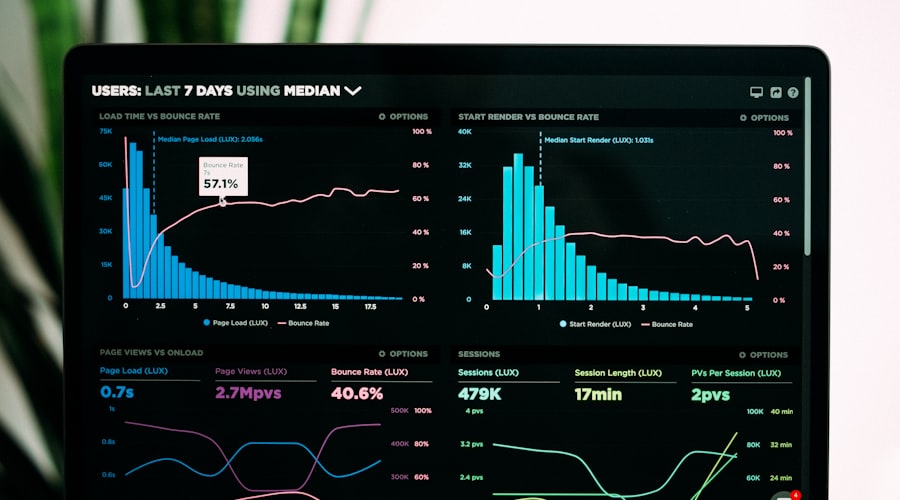
5. Create a Reporting Dashboard
Build a single-page dashboard in Looker Studio (free) connecting GA4, Meta Ads, and Google Ads. Top section: revenue KPIs. Middle: channel performance. Bottom: trend lines. Update weekly. If it takes more than 10 minutes to check, it won't get checked.
6. Establish Benchmarks
Use your first 30 days of clean data as your baseline. HK benchmarks to compare against: e-commerce ROAS 3-5x, lead gen CPL HK$80-250, Meta CPC HK$2-8, Google Search CPC HK$5-25. If you're wildly outside these ranges, investigate before optimizing.
7. Review and Optimize Cadence
Weekly: check spend pacing and anomalies. Bi-weekly: review channel-level ROAS and reallocate 10-20% of budget from underperformers. Monthly: full ROI report with LTV:CAC update. Quarterly: reassess attribution model and benchmarks.
Attribution Models: Which One Fits Your Business?
No single model is perfect. The right choice depends on your sales cycle, data volume, and team sophistication.
| Criteria | Last Click | First Touch | Linear | Time Decay | Data-Driven |
|---|---|---|---|---|---|
| Accuracy | Low | Low | Medium | Medium-High | High |
| Setup Complexity | None (default) | Low | Medium | Medium | High |
| Data Required | Minimal | Minimal | Moderate | Moderate | 1,000+ conversions/mo |
| Best For | Direct-response, short cycles | Brand awareness campaigns | Equal-weight multi-channel | Long sales cycles, B2B | High-volume e-commerce |
| Tools Needed | GA4 (built-in) | GA4 + UTMs | GA4 + CRM | GA4 + CRM | GA4 360 or custom |
| HK Adoption Rate | ~68% | ~12% | ~9% | ~7% | ~4% |
From Zero to Full Measurement in 3 Phases
Don't try to build everything at once. Phase it out over 8-12 weeks for sustainable adoption.
Phase 1 · Week 1-2 — Setup
- Audit existing tracking
- Install GA4 + Meta Pixel
- Define UTM conventions
- Tag all active campaign links
- Set up conversion events
Phase 2 · Week 3-4 — Baseline
- Collect 2 weeks of clean data
- Build Looker Studio dashboard
- Calculate initial CAC & ROAS
- Document channel benchmarks
- Identify first quick wins
Phase 3 · Month 2-3 — Optimize
- Run first budget reallocation
- Test attribution model upgrade
- Implement CRM integration
- Build LTV tracking
- Set quarterly review cadence
Measurement Frameworks by Industry
Different business models need different primary metrics. Here's what to focus on in Hong Kong's most common verticals.
E-Commerce
Track ROAS as your north star. For HK online retail, a 3x ROAS on Meta and 4x on Google Shopping is the minimum viable threshold. Below that, check your product page conversion rate (HK avg: 1.8%) before blaming the ads.
Primary KPI: ROAS · Target: 3-5x
Lead Generation
Track CPL through to close rate. A HK$150 lead means nothing if only 5% convert. Calculate cost per closed deal: if your CPL is HK$150 and close rate is 20%, your true CPA is HK$750. Compare that against your average deal value.
Primary KPI: Cost Per Closed Deal · Target: <15% of deal value
F&B / Retail
Track footfall attribution using store visit conversions in Google Ads (available in HK for locations with sufficient traffic) and coupon redemption codes for Meta campaigns. Average HK F&B cost per store visit: HK$8-25.
Primary KPI: Cost Per Store Visit · Target: HK$8-25
Professional Services
Track LTV:CAC ratio. Service businesses in HK typically have 12-36 month client relationships. A HK$3,000 CAC is acceptable if your average client LTV is HK$45,000. Anything below a 3:1 LTV:CAC ratio needs attention.
Primary KPI: LTV:CAC Ratio · Target: 3:1 minimum
Common Questions About Marketing ROI
What's a good ROAS for Hong Kong businesses?
It depends on your margins. E-commerce with 60% gross margins can be profitable at 2x ROAS. Low-margin businesses need 5x or higher. The HK average across industries is approximately 3.2x on Meta and 4.1x on Google Search.
How much should I spend before I can measure ROI accurately?
You need statistical significance. As a rule of thumb, budget for at least 50 conversions per campaign before drawing conclusions. At a HK$150 CPL, that means HK$7,500 minimum per campaign test.
Should I use the same attribution model for all channels?
No. Use last-click for bottom-funnel campaigns (Google Search, retargeting) where the goal is direct conversion. Use first-touch or linear for upper-funnel campaigns (brand video, awareness) where the value is introducing new prospects.
How do I track offline conversions from online ads?
Three methods work well in HK: unique promo codes per campaign, dedicated phone numbers or WhatsApp links with UTM tracking, and Meta's Offline Conversions API where you upload transaction data back to match against ad exposure.
What tools do I need to get started?
The free stack covers most HK SMEs: GA4 for web analytics, Google Tag Manager for event tracking, Looker Studio for dashboards, and the built-in reporting in Meta Ads Manager and Google Ads. You only need paid tools (HubSpot, Mixpanel) once you're spending above HK$100K/month.
How often should I review marketing ROI?
Weekly for spend pacing and anomaly detection. Bi-weekly for channel-level ROAS review and budget reallocation. Monthly for a full ROI report including CAC and LTV updates. Quarterly for strategic review of your attribution model and benchmarks.
What's the biggest measurement mistake HK businesses make?
Treating platform-reported conversions as ground truth. Meta and Google both over-count because they use different attribution windows and both claim credit for overlapping conversions. Always reconcile against actual revenue in your accounting system.
Not Sure Where Your Budget Is Going?
We'll audit your current tracking setup, identify measurement gaps, and build you a custom ROI framework in a 45-minute strategy session.